| Change of pronouns, adverbs, etc. |
|
|
| Personal pronouns, possessive pronouns, ajectives and adverbs may or may not change depending on who the speaker is and when and where he is speaking: |
|
|
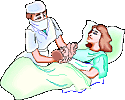
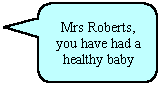
Some time later, Mrs Roberts is talking to a friend and
says, I was very happy when the doctor told me I
had had a healthy baby.
After the birth of the baby, the doctor gets home and says to his wife, Mrs Roberts felt very happy when I told her she had had a healty baby. |
In the first example Mrs Roberts is speaking about herself, so she uses me and I . But in the second example the doctor is speaking to his wife about Mrs Roberts, so he has to use third person pronouns: her and she.
It is important to use your common sense and to pay attention to who is reporting what, where and when:
Some common changes in time expressions are:
| Direct speech | Indirect speech | |
| today | that day | |
| yesterday | the day before | |
| the day before yesterday | two days ago | |
| last week / month, etc. | the previous week | |
| a year / two years ago,etc. | a year before / the previous year | |
| tomorrow | the next day / the following day | |
| the day after tomorrow | in two days´ time | |
| next week / month, etc. | the following week / year |